The Royal Cayman Islands Police Service (RCIPS) is a single, national police service with a unified command structure. It is an unarmed service, with an armed response capability, which is mandated by statute to deliver the full range of police services across the Cayman Islands and its territorial waters. Founded in 1907, the RCIPS was staffed by over 480 employees, over 380 police officers and over 100 civilian staff, who serve the over 80,000 people who live on the islands, as well as the approximately two million people who visit each year. RCIPS officers answer the vast majority of all emergency calls dispatched by the 9-1-1 Communication Centre, and in an average year, respond to over 37,000 calls for service in total, encompassing both 9-1-1 dispatches and reports received through police stations.
Officers and personnel work in a variety of roles, including emergency response, road and marine safety and enforcement, child protection, criminal investigation, intelligence, drug and firearm interdiction, border security, community outreach, finance and administration, and many others. Owing to the geography and small size of the jurisdiction, the RCIPS is mandated to provide several aspects of security and safety in addition to regular policing, such as national security and regional and international financial crime investigation. The service also assists our partner agencies such as the Cayman Islands Coast Guard with marine search-and-rescue, and criminal interdictions in territorial waters, which would not come within the remit of municipal police forces of similar size in larger jurisdictions. Therefore, while the number of police officers may be higher per capita than in larger countries, the RCIPS is relatively small considering the scope of its responsibilities and breadth of policing duties. Its personnel are likewise versatile in their skill sets.
The Cayman Islands is described as a relatively safe jurisdiction in the Caribbean region by both official and private sector sources, with a low incidence of violent crime or crimes affecting visitors. The RCIPS attributes its many successes to the tenacity and versatility of its hardworking officers and staff, but also to the enthusiasm and involvement of the members of the community it serves. The community of the Cayman Islands boasts a large number of charitable and community organisations for its small size, some of which partner with the RCIPS toward public safety objectives (see Partnerships).
The RCIPS views community partnerships like these as the foundation for sustainable reductions in crime, but also as essential for national resilience in the face of major emergencies or natural disasters, during which trust and cooperation between the public and law enforcement is vital. As a police organisation, the care, protection and trust of the public is the core objective of all that we do, and this objective drives our policing plans and our corporate Vision, Mission and Values, which are intended to guide our officers in all of their interactions with the public.
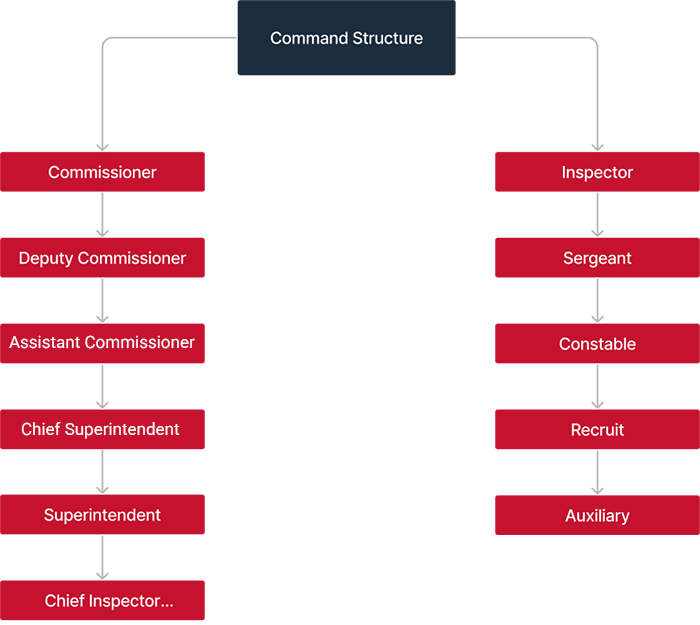
The RCIPS has a unified command structure based in the policing model of the United Kingdom, with ranks for police officers, ranging from Commissioner of Police to Auxiliary Constable, in the following order:
The prefix “detective” is given to officers who are assigned to conduct criminal investigations after completing the necessary selection and training process. Detective ranks run parallel to uniformed ranks, and range from Detective Constable to Detective Superintendent.
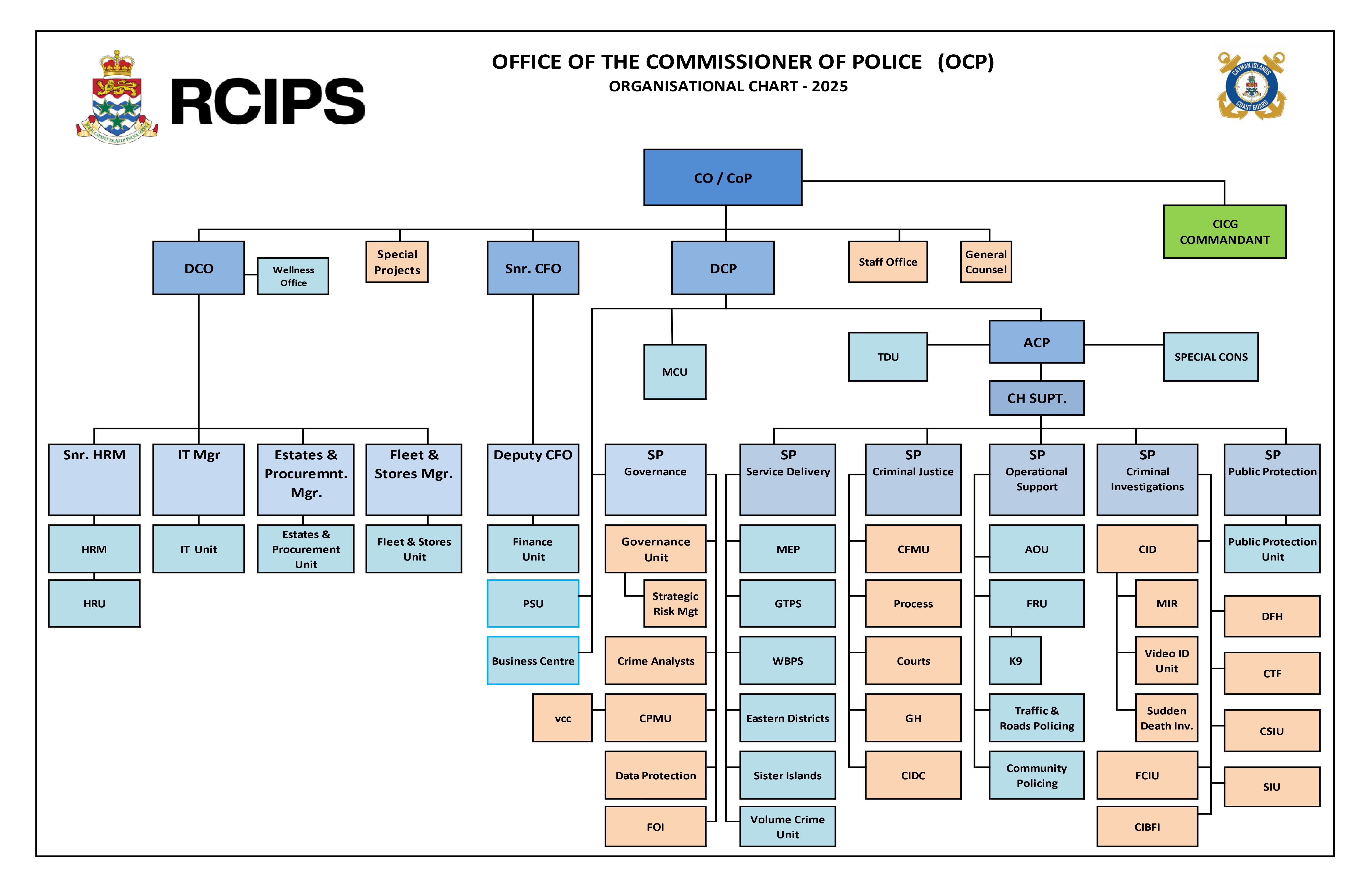
The RCIPS divides its policing of the jurisdiction both geographically and functionally, across six main departments, each overseen by a Superintendent. These are Service Delivery, Criminal Investigations, Operational Support, Public Protection, Criminal Justice and Management/Governance.
General shift policing by uniformed officers, which includes response to 9-1-1 calls for service all over the islands, as well as community policing, falls under Service Delivery, as do the general policing duties of officers assigned to police stations throughout the district and operating under the command of the district inspector (area commander).
Policing duties requiring additional training and expertise fall under Operational Support, e.g., firearm response, operations, traffic, and K-9, who also work shift patterns.
The operational units which investigate serious, financial, and cyber crime are staffed by detectives and fall under Criminal Investigations.
RCIPS Protective Services falls under Public Protection and includes the detectives and staff who investigate domestic-related crime, and incidents involving children. These officers work alongside other child protection partners as part of the Multi-Agency Safeguarding Hub.
The officers who provide support and security for our court system, as well as the Government House, the residence of the Governor, and also manage the Cayman Islands Detention Centre, fall under Criminal Justice.
In addition to the organization of its policing departments, the overall administration of the organisation is considered to be RCIPS Management, which operates from Police Headquarters in the RBC Building on Shedden Road. RCIPS Management includes finance and business administration, human resources, media and communications, estate management and strategic management. Other administrative departments such as the Crime Analysis Unit, which oversees the organization’s statistical analysis of crime, and the Criminal Records Office and Security and Firearms Licensing Unit, which also manage records and administration, also fall broadly in this category and are staffed by a mix of police officers and civilians.
The RCIPS reflects the diversity of the community it serves, with officers and staff of 19 different nationalities. While the organisation embraces this diversity as a strength, it also engages in regular recruitment drives aimed at increasing the number of Caymanians among its ranks in order to ensure adequate representation of the local community. The RCIPS recruits at least one local recruit training class per year, and advertises these opportunities to qualified local persons who are interested in joining the service in a policing capacity.
In addition, the RCIPS regularly advertises for special constables, experienced constables, and civilian roles.
The application process for these positions is conducted through the Cayman Islands Government’s careers website at careers.gov.ky. The RCIPS welcomes applications from qualified people with a commitment to the public safety of the Cayman Islands.
The RCIPS as an organization is dedicated to a vision of making the Cayman Islands safer. For the RCIPS this means that each and every person who lives, visits or works on these islands can go about their lives and the contributions that they make to our society while feeling secure from physical, mental or financial harm or the threat of such harm. It means increasing the safety of our communities in all aspects, while also reducing both the incidence and the fear of crime. It is a vision of safety for the islands that is both resilient and enduring.
Making such a vision reality requires a modern and progressive 21st century police service working in a close and sustained partnership with the community. The mission of our organization, therefore, or the way we plan to achieve our vision of making the Cayman Islands safer, is by working with our communities and working for our communities. The values guiding us as we seek to deliver this vision are Respect, Courtesy, Integrity, Professionalism and Service (RCIPS), which require the commitment of each and every officer and civilian staff member of the RCIPS to public safety and victim care first and foremost.
Thus, becoming the service and building the relationships that can execute our mission and achieve our vision, while holding fast to our values, is the objective of all the actions that we take every day at the RCIPS, whether on the frontline or in management. This broad objective is broken down from a corporate perspective into three main strategic goals, which are: Securing the Cayman Islands, Ensuring Safe Communities and Delivering a Professional Service. These goals set the direction for corporate plans, training and other activities.
Any progress toward meeting our strategic goals, mission and vision as a police service must always be evaluated in terms of the alignment of this progress with RCIPS values. The RCIPS Code of Conduct is underpinned by these values, and guides officers in the observation of these values in practice and on duty.
Law enforcement in the Cayman Islands was not formally established until 1907, when legislation was passed founding a police service. At that time the population of all three islands that comprise the present-day U.K. Overseas Territory – Grand Cayman, Cayman Brac and Little Cayman – totaled slightly more than 5,000. The nascent police force was initially commanded by a British Inspector and four local constables, whose police duties included acting as postal and customs officials, guarding short-term prisoners in jail (as there was no prison) and hoisting the Cayman Islands flag over government buildings, in addition to investigating crime. In general, offences during this period were of a trivial nature.
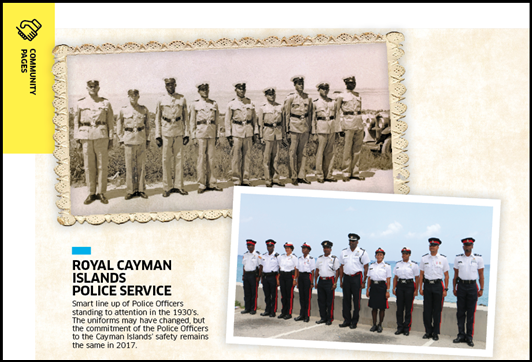
Until 1962, the Cayman Islands were governed by the British Crown as a colony of Jamaica. In the 1950s the Jamaican police force had reorganised the Cayman Islands’ police force and established the role of a local Chief of Police, which was filled by an experienced officer from Jamaica. With Jamaica’s independence from the British crown in 1962, the Cayman Islands were governed by Britain directly as a colony, and it became more common for British officers to fill the role of Chief of Police (later renamed Commissioner of Police).
In 1959 the police force recruited its first two women constables, who primarily handled cases involving women and children. By 1970 the force was fifty-nine members strong, and constables earned sixty pounds per year on average. In 1978 a five-day work week had been adopted.
Her Majesty, Queen Elizabeth II, visited the Cayman Islands in 1983 and conferred the prefix “Royal” to the Cayman Islands Police Force, which was a great honour for all officers. Throughout the 1980s the police force underwent several more reorganisations as it expanded, and by 1990 it employed 221 officers. During the 1990s several new units emerged, including the Uniform Support Group comprised of armed officers, a Community Relations Department comprised of neighbourhood officers, a Traffic Management Unit, and other units within the detective branch. The establishment of a civilian-staffed Emergency Communications Centre in the mid-1990s enabled police operators to be re-deployed.
The Code of Conduct and Policing Charter were introduced in 1996 and 1997, respectively, which set forth the quality of service required of officers and expected from the community; the organisation also formally changed its title from ‘force’ to ‘service’, and has been referred to as the Royal Cayman Islands Police Service (RCIPS) from that point forward.
Throughout the 2000s, the population of the Cayman Islands swelled to nearly 60,000, and the police service grew to nearly 400 officers and 60 support staff. Policing demands also surged, as the local population continued to carry the traditional expectations of police involvement in non-police matters, while the amount of actual crime, in the form of burglaries and some gun violence, increased. In addition, police properties around the islands, especially the police stations in central George Town and West Bay, which were buildings never built to purpose, fell into disrepair. In 2016, a new Police Custody Detention Centre opened on Grand Cayman, ending the use of old cells in George Town Police Station for detention. In 2017 the Cayman Islands Government began discussions around the purchase of a new building to house a new George Town Police Station.
In September 2023, then Deputy Commissioner Kurt Walton was appointed to the role of Commissioner of Police (CoP), succeeding Commissioner Derek Byrne. He leads a Senior Command Team and is supported by Deputy Commissioner, Anthony Ennis a veteran of the RCIPS, and Assistant Commissioner Robert Atkin.
2017 marked the 110th anniversary of the founding of a police force in the jurisdiction, and to mark this anniversary, the RCIPS commissioned a retrospective publication that looks back on its rich history, featuring interviews with some of its longest-serving officers. This special publication demonstrates that RCIPS officers have proudly served the Cayman Islands for generations, and that the RCIPS has changed along with the islands themselves to become the proud and professional police service it is today.
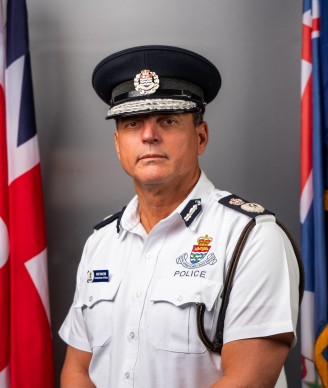
Commissioner of Police Kurt Walton is responsible for the organizational effectiveness and governance of the Royal Cayman Islands Police Service. He also holds the title of Chief Officer for the Office of the Commissioner of Police, which oversees both the RCIPS and CICG Departments.
Commissioner Walton was promoted to his current role in September 2023, after serving as Deputy Commissioner since 2016 and Chief Superintendent overseeing all policing operations since 2013. Commissioner Walton has been a police officer with the RCIPS since 1986, with a career focused in serious crime investigations and border defence through the disruption of narcotics and firearms trafficking.
Commissioner Walton successfully completed his Senior Investigators training in Barbados in 1997, as well as the International Command Program at Bramshill, UK in 2007. In 2011 he also became certified as a Strategic Gold Firearms Commander. In 2014 he returned to the UK and completed a Strategic Command Course. From 2002 and 2008 Commissioner Walton attended the Cayman Islands Law School while working full-time, and earned his Bachelor of Law degree. He also holds a Post Graduate Certificate in Criminal Justice and Police Management from the University of Leicester.
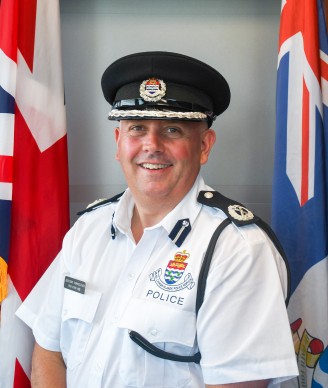 Rob Atkin MBE currently holds the rank of Deputy Commissioner of Police with responsibility for governance and strategy.
Rob joined the RCIPS in September 2024 after serving 31 years in the UK. Rob has served in both the Metropolitan and City of London Police. With over 10 years’ experience as a Chief Superintendent Rob has led a variety of policing commands including: Force Firearms Command; Aviation Policing for London Heathrow and London City Airports; Strategic Learning, Recruitment and Police Promotions; South East London Policing Command with circa 2000 staff covering response, community, safeguarding and investigative policing services; City of London Headquarters services, strategy and governance; City of London Uniform policing operations including roads policing, firearms, mounted, command and control, response & community policing.
Rob completed the UK Police Executive Leadership Program in 2024 (Strategic Command Course) and is a qualified Strategic Firearms Commander, Gold CBRN Commander, Counter Terrorism Security Co-Ordinator, Multi Agency Gold Incident Commander and has maintained both police advanced car and motorcycle qualifications. Rob has a degree in Policing and Police Management from Portsmouth University, a post graduate certificate in Crime and Disorder Management from Teesside University and a Level 7 Diploma in Strategic Leadership from the Chartered Management Institute.
In 2014, Rob was awarded the MBE by her late Majesty Queen Elizabeth for his work in supporting families of fallen Police Officers killed in the line of duty. Work he proudly continues to this day.
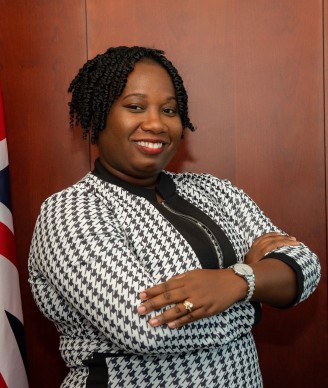 Jody-Ann Moore currently serves as the Deputy Chief Officer (DCO) for the Office of the Commissioner of Police, overseeing both the Royal Cayman Islands Police Service (RCIPS) and the Cayman Islands Coast Guard (CICG). She was appointed to this role in April 2024, following her tenure as Estates and Procurement Manager since 2020, where she successfully led procurement, estates management, and business operations for the Service.
DCO Moore brings extensive experience in Strategic Leadership, Organisational Development, Change Management, and Innovation. Her leadership has been instrumental in enhancing the working conditions for police officers, significantly improving operational environments.
Academically, DCO Moore holds a Bachelor’s Degree in Criminal Justice with a concentration in Forensic Sciences from Northern Caribbean University and a Master’s Degree in Adult and Continuing Education from the University of the West Indies. She also holds a Diploma in Procurement and Supply from the Chartered Institute of Procurement and Supply and a Diploma in Information and Communications Technology from the University of Cambridge.
Her contributions to the RCIPS have been recognized through several awards, including the Deputy Governor Award - Chief Officer’s Choice in August 2021 and Commissioner Commendations in 2023 for her dedicated and commendable service.
DCO Moore is known for her passion, dedication, and customer-centric approach. She is highly organized and transparent, ensuring public accountability and adherence to the values and code of conduct of the Cayman Islands Government.
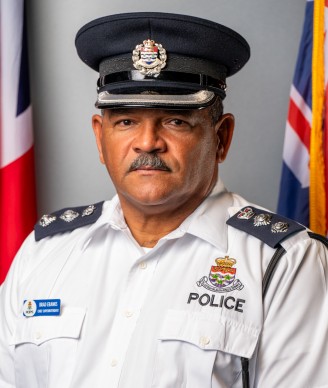 Brad Ebanks currently holds the position of Acting Assistant Commissioner of Police with responsibility for operations and security.
He has been a serving member of the Royal Cayman Islands Police Service (RCIPS) for over 37 years, and was promoted to the rank of Chief Superintendent in May 2023.
Chief Superintendent Ebanks focuses on good governance across the RCIPS, ensuring that proper structures and frameworks are in place to deliver optimum service to the Cayman Islands. One of his current priorities is the fight against serious crime and illegal firearms in the Cayman Islands.
During his career, he has served in both Uniform Operations and the Criminal Investigations Unit as well as serving as the Marine Commander in charge of the Joint Marine Unit, which oversaw maritime safety, and enforcement, prior to the establishment of the Cayman Islands Coast Guard in 2022.
Chief Superintendent Ebanks is the recipient of a number of management and leadership courses at law enforcement colleges and facilities throughout the Caribbean as well the USA, Canada and the United Kingdom. He is a trained Strategic Firearms Commander and Major Incident Commander, including Multi-Agency Gold Incident Commander training. He also forms part of the major disaster planning and response team for the RCIPS.
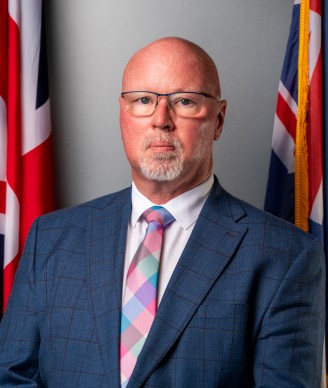 Detective Superintendent Pete Lansdown is responsible for an expansive portfolio including all detective units (aside from Public Protection), the Joint Intelligence Unit, Crime Scene Investigation and Exhibits. Altogether, he leads approximately 100 staff investigating all major crime across all three islands.
Having joined the RCIPS in 2016, Detective Superintendent Lansdown is a career detective with 44 years of operational policing experience with the RCIPS & the Metropolitan Police Service, New Scotland Yard in London (the Met), during which time he achieved the rank of Detective Superintendent in charge of Operational Firearms deployments. During his career he also supervised over 100 detectives and specialist support services within the Homicide and Serious Crime Command for North London through hundreds of homicide investigations.
Detective Superintendent Lansdown is accredited as a Homicide Senior Investigating Officer to the level of PIP 3, and is also certified as a Tactical Firearms Commander and Strategic Firearms Commander. He helped develop the Met and UK’s National SIO’s Development Programme (SIODP), and was also selected to create a new Operational Firearms Command Structure within the Met. Before joining the RCIPS, Detective Superintendent Lansdown also held the position of Head of Senior Detective Training at the Crime Academy of the Met.
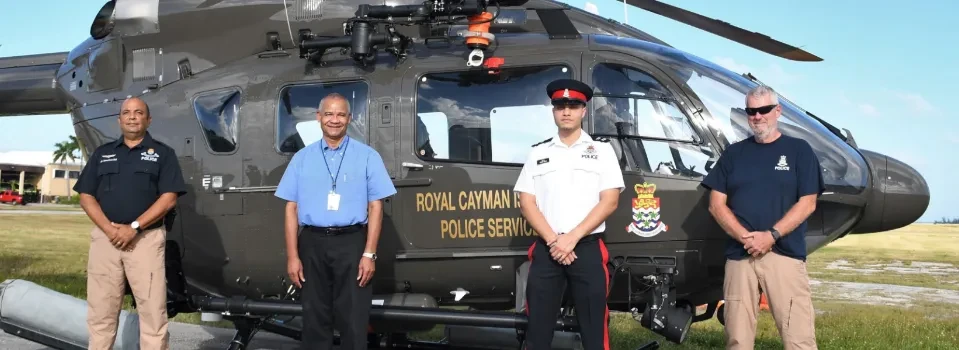
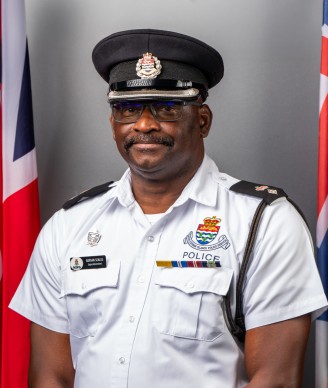 Superintendent Adrian Seales is responsible for Operational Support, and oversees all of the specialist units in the RCIPS, including Air Operations Unit, Firearms Response Unit, and K9; as well as Community Policing and Traffic & Roads Policing.
Superintendent Seales joined the Royal Cayman Islands Police Service in 1981 as a constable and has served in a number of roles during his 43 years with the RCIPS. His prior roles include Area Commander, both in the Eastern Districts of Grand Cayman and on the Sister Islands, Head of Community Policing, Supervisor of the Traffic Unit and Training Instructor at the Training School. In April 2007 he was promoted to the rank of Superintendent with responsibility for District Operations (Uniform Branch). Superintendent Seales was formerly responsible for Estate Management, Licensing, Administration and Data Management within the overall Management portfolio. He took over as head of Training in October 2019.
Superintendent Seales is a graduate of Royal Canadian Mounted Police College; Regional Police Training Centre, Barbados; Jamaica Police Staff College; Institute of Police Technology and Management, USA; and National Police Improvement Agency, Bramshill, UK. He is also a trained Public Order Commander and a trained Hostage Negotiator from the Metropolitan Police in London, UK, and has received training in other police disciplines in North America, the Caribbean and the UK. He attends the University College of the Cayman Islands, where he is pursuing a degree in Business Administration and holds a Post Graduate Certificate in Criminal Justice and Police Management from the University of Leicester.
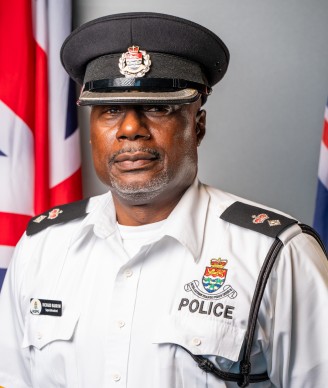 Superintendent Richard Barrow heads the Public Protection Portfolio of the RCIPS, overseeing the RCIPS Pubic Protection Unit, a role involving a high degree of multi-agency collaborations.
Superintendent Barrow has been a member of the Royal Cayman Islands Police Service (RCIPS) for 24 years, having previously worked for 5 years with the Royal Barbados Police Service. He was promoted to the rank of Superintendent in 2022.
During his career with the RCIPS, he has worked in various departments including as the deputy head of the Criminal Investigation Department (CID), with responsibility for approximately 100 detectives engaged in specialist CID policing. He has had the distinction of assuming the role of the Area Commander for all districts within Grand Cayman and the role of Head of the Professional Standards Unit. He has also served as the head of two specialist financial investigation teams (Domestic & International).
Superintendent Barrow has represented the RCIPS and the jurisdiction at several high-profile strategic financial forums that are observed internationally.
He holds a Degree (Hons) in law from the Cayman Islands Law School and has successfully completed a Professional Practice Legal Certificate with the Cayman Islands Law School. His professional development includes, but is not limited to, the Junior Commander’s Programme, where he was the recipient of a Certificate of Commendation for the Top Performer; Strategic Leadership Development; and Specialist/Technical skills with the Multi-Agency Gold Incident Command (MAGIC) Training.
Superintendent Barrow is an advocate for strong and effective leadership and management towards building an efficient police service.
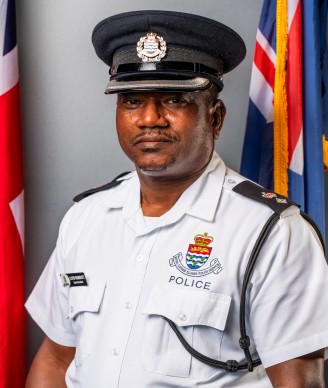 Superintendent Lloyd Marriott leads the Governance, Performance and Accountability Unit. The unit’s primary responsibility is to provide oversight and support for operational policing by reviewing and regularising work systems and processes to promote effective service delivery across the Cayman Islands.
Superintendent Marriott has served with the RCIPS for 19 years. In 2005, Supt. Marriott joined the RCIPS as an experienced police constable, and has risen through the ranks, most recently being promoted to the rank of Superintendent in November 2022, having served as the Commanding Officer for George Town and West Bay police districts respectively.
Superintendent Marriott is a proficient police officer with a broad array of policing skills, knowledge, and experience. He has worked in various police departments, including the Criminal Investigation Department, the Firearms Unit, and the Service Delivery Department. As a trained Firearm Commander, Supt. Marriott obtained his initial firearm training from the City of London Police in 2017. He later completed the Strategic Firearm Commander’s training in 2023 at the RCIPS Training and Development Unit. Supt. Marriott is also a trained Hostage and Crisis Negotiator – obtaining his training from the City of London Police in 2017. He is also a trained Critical Incident Manager, and Major Incident Commander, and has attended various Strategic Leadership courses in the United States, Canada, Jamaica, and the Cayman Islands.
Superintendent Marriott is a graduate of the Canadian Police College and the Caribbean Military Academy obtaining certificates in Senior Police Administration and Strategic Leadership respectively. He holds a Diploma in Leadership and Management studies; an associate degree in Public Administration from the University College of the Cayman Islands (UCCI); and an MSc degree in Business Psychology from the University of South Wales.
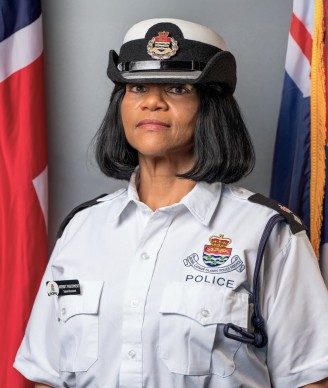 Superintendent Wendy Parchment oversees the portfolio of Criminal Justice and Security services, which includes oversight of the Case File Management Hub, Security for the Governor's residence, security of the Cayman Islands Courts, and the Cayman Islands Prisoner Detention Centre.
She currently oversees a staff of one Chief Inspector, two Inspectors, eight Sergeants, four Constables, 38 Auxiliary Constables as well as four Police Staff.
Superintendent Parchment has served as a police officer for over 37 years, having joined the service on August 6, 1986. She was promoted to the role of Sergeant in 2000, and later received training as a Tactical Advisor and Firearm Incident Commander in February 2011. She was promoted to Inspector of Police in July 2015 after which she served as Area Commander for the Sister Islands for two years. She was promoted to the role of Superintendent in 2022.
During the span of her career, she has been trained and certified in various areas, served in all uniformed divisions, including the Traffic & Roads Policing Unit, and in each district. As the Area Commander for the Sister Islands: Cayman Brac and Little Cayman, which have a total of roughly 2200 citizens combined, she had the responsibility of overseeing the security of border control and the safety of the citizens and the broader communities. She has investigated traffic fatalities and other major accidents, conducted case file management, commanded critical incidents, and assisted in criminal investigations for offenses such as rape, burglaries, and robberies.
Beginning in March 2019, Superintendent Parchment has had overall command of all operations and administration of the Prisoner Detention Centre, ensuring that basic human rights are afforded to persons in detention or who are making court appearances, and safeguarding their health and safety while following best practices.
Superintendent Parchment holds an Associate’s Degree in Business Administration and is currently undertaking a Bachelor’s Degree in Social Science. She also holds a City & Guilds ICS (Gold) Level 4 ILM Award and is also a qualified Strategic Firearms Commander. She has various certificates in Strategic Leadership Management/Programmes, most recently having successfully completed the Leadership Cayman Program.
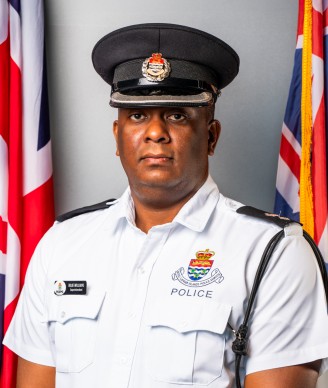 Superintendent Roje Williams is responsible for Service Delivery, which includes Uniform Operations in all districts and the Sister Islands, and Major Events & Major Emergency Planning.
Supt. Williams believes community engagement from a policing perspective and civic pride from a total community perspective are the backbone towards ensuring safer communities.
The RCIPS, including both civilian staff and police officers, is organised into various Units, which fall under one of six portfolios.
Service Delivery is comprised of the front-facing units of the service, who are responsible for the initial response to incidents, and pro-active patrols.
Criminal Investigations encompasses all of the investigative units of the RCIPS. These are the officers and staff who investigate serious and complex crime, from murder and financial crimes, to cyber-enabled crime.
Operational Support refers to the units which handle policing functions outside of first-response policing or criminal investigations, such as aerial operations, responding to firearms incidents, traffic policing or handling police dogs.
Public Protection refers to the officers who make up RCIPS Protective Services, including those officers who investigate domestic abuse incidents, child safeguarding matters, and all crime affecting vulnerable members of society. The officers also work as part of the Multi-Agency Safeguarding Hub (M.A.S.H).
Criminal Justice encompasses the various units which assist in facilitating the criminal justice process. This includes officers who staff the Cayman Islands Detention Centre. Officers who provide security to the Courts, as well as the Government House, and those who assist in managing case files and preparing them for submission to the Office of the Director of Public Prosecutions for ruling, also fall under this portfolio.
Governance includes various units which have oversight functions within the service, including the Governance Unit itself.
Management refers to all of the civilian, support, and business units within the service, as well as those which handle various licenses and forms.
The RCIPS has police stations in every district of the Cayman Islands, including Little Cayman and Cayman Brac. Frontline officers operate out of these district police stations, conducting regular patrols and responding to incidents. Other units such as the Criminal Investigations Department also have officers stationed at various district police stations. The management and most of the senior leadership of the service operate from the Police Headquarters in George Town.
In addition to police stations and the Police Headquarters, there are a number of other RCIPS facilities which house units such as Traffic & Roads Policing and Training & Development
The Office of the Commissioner of Police is a government portfolio consisting of the Royal Cayman Islands Police Service (RCIPS), Cayman Islands Coast Guard, and Cayman Islands Regiment, as well as the civilian support staff for the three organisations.
The Office of the Commissioner of Police (OCP) was formed in 2020, as the portfolio overseeing the RCIPS (which had previously been part of the ministry of Human Resources & Immigration) and newly-created Cayman Islands Coast Guard, with the Commissioner of Police appointed as Chief Officer. The civilian administrative staff of the RCIPS, in units such as Human Resources, Finance, and Information Technology, became OCP staff, serving both organisations. In 2025, the Cayman Islands Regiment was moved from the Ministry of Home Affairs to the Office of the Commissioner of Police, becoming the third organisation within the portfolio.
The Cayman Islands Coast Guard is the maritime security, law enforcement, and search and rescue agency of the Cayman Islands. It operates with the motto, "To Save Lives & Protect Our Borders."
The Cayman Islands Regiment (CIR) is the non-standing, voluntary home defense reserve force for the Cayman Islands. Established to bolster national resilience and security, the Regiment's primary function is to provide critical Humanitarian Assistance and Disaster Relief, both domestically and internationally.
The communities of the Cayman Islands are very engaged in outreach and charitable activities for the betterment of the islands, and the RCIPS is grateful for the enthusiasm of residents to identify and address issues affecting the greater public. Many public campaigns and activities in Cayman encourage crime prevention and public safety, and the RCIPS is proud to partner with community members, non-profit organizations, and other government departments toward these shared objectives. Areas of partnership include youth outreach, crime detection and prevention, road safety and child protection. Those interested in getting involved in any of these specific activities can find contact information through the relevant links provided or can email pr@rcips.ky for more information.
The most commonly asked questions of the RCIPS, by members of the public.